


Some evenings ask for nothing louder than a lamp, a cup of tea and a problem you can turn over slowly. A good puzzle does something scrolling never quite manages: it holds your attention so completely that the day falls away.
Foldology Origami Puzzle Game

Each sheet holds scattered fragments of a picture. Your task is to fold the paper until the pieces line up into a single complete image: a cathedral, a planet, a field at sunset. It sounds simple. It is not, and that’s the pleasure of it.
There are a hundred puzzles in a notepad-style pad, growing harder as you go. One reviewer skipped ahead to the later levels and was nearly stumped, but found the eventual solve deeply satisfying; a friend watching her struggle couldn’t resist asking for a turn. It’s made by a small business, suits ages ten and up, and slips easily into a bag for waiting rooms and train rides.
The World of the Museum Jigsaw
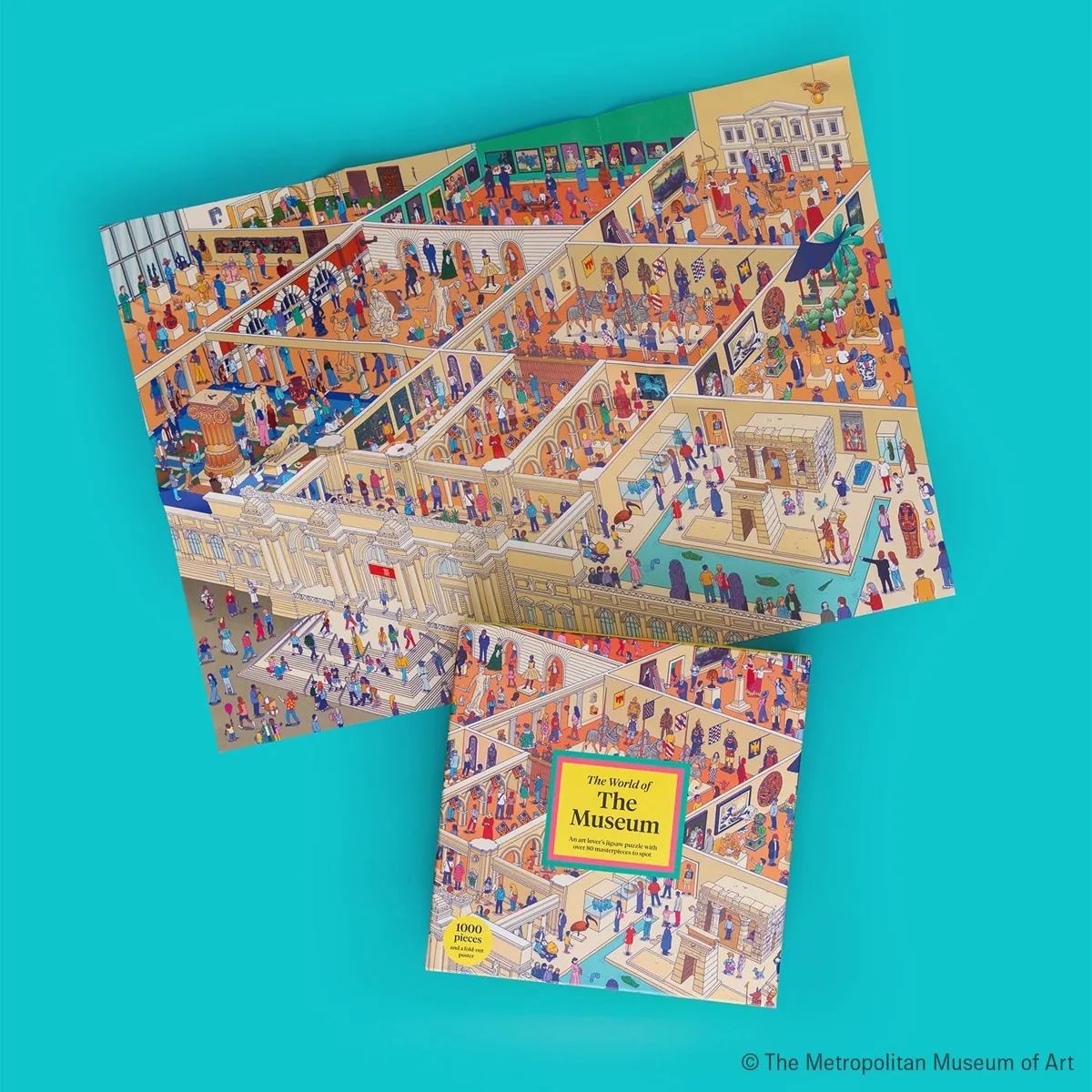
A thousand pieces, and inside them an entire museum. Illustrator Andrew Rae drew The Met in cutaway, room by room: armor and banners, Egyptian temples, painted galleries, crowds wandering the grand staircase. The box promises more than eighty masterpieces to spot as the scene comes together.
It belongs to Laurence King’s “The World” series and includes a fold-out poster, which is handy as a reference and lovely on its own. Expect to linger over the tiny figures as much as the fitting of pieces.
National Parks Jigsaw Puzzle
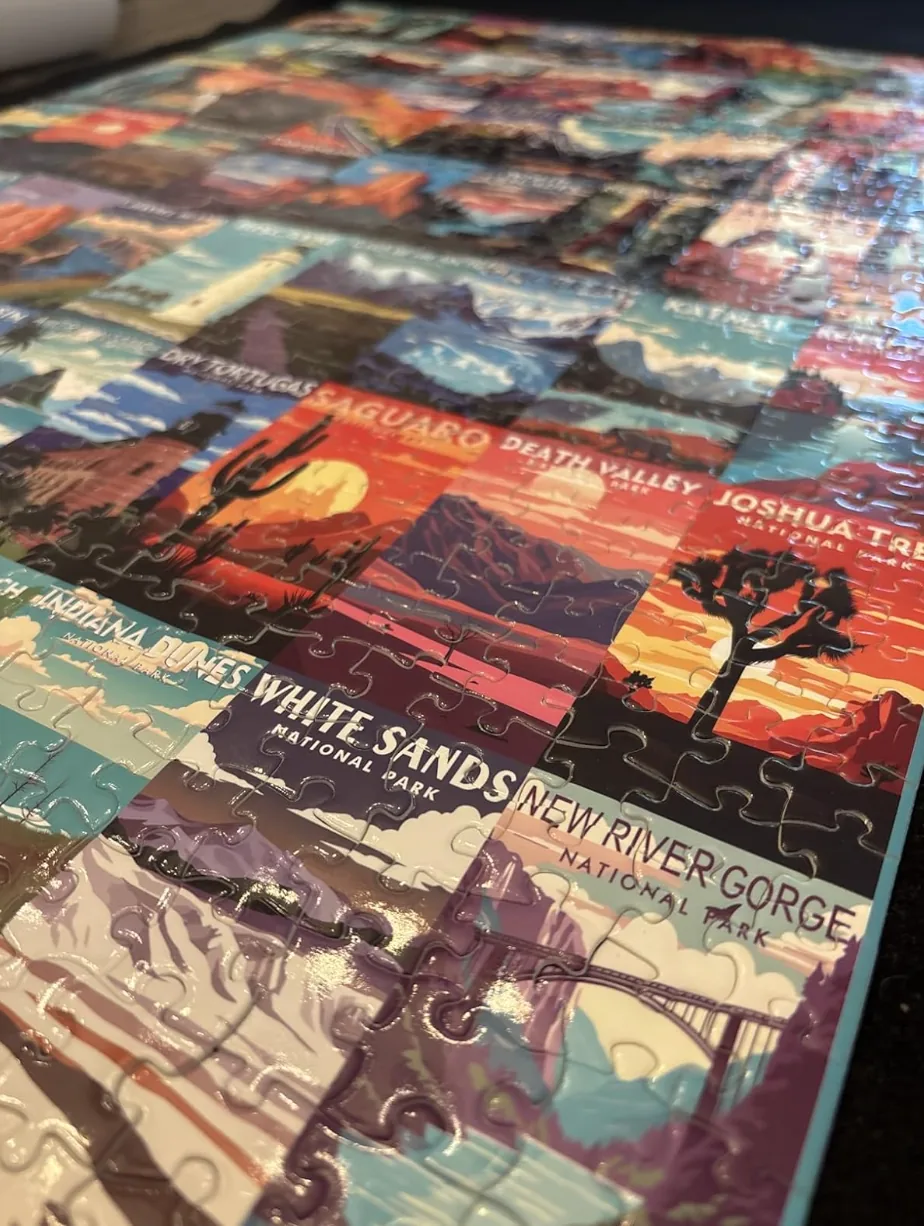
A different kind of journey. This thousand-piece jigsaw is a mosaic of illustrated national park posters, so each section you finish is a small landscape of its own, and somewhere around the halfway point you may find yourself planning a trip.
One reviewer whose family had visited many of the parks enjoyed working it so much that she glued and framed the finished puzzle, the first she had ever kept, and hung it beside photos from their cross-country travels.
Murdle Volume One
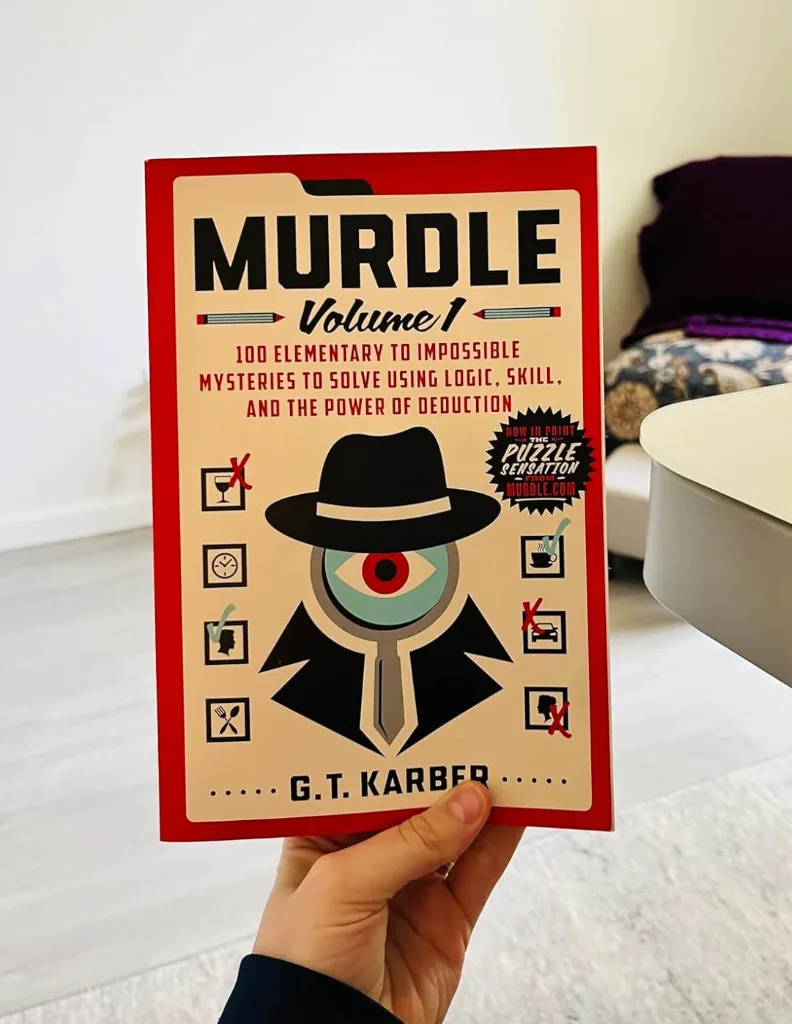
If you prefer your quiet evenings with a body in the library, Murdle is a book of murder mysteries solved with pure deduction. Each case gives you clues and a logic grid; you work out who did it, where, and with what.
The hundred mysteries climb through levels of difficulty. Early cases ask only for suspect, location and weapon. Later, the murderer begins to lie while everyone else tells the truth, then you must find a motive as well. Readers say the characters and little storylines are what lift it above an ordinary logic book, and one admitted it brought out their inner Jessica Fletcher. It works alone or passed around with friends.
Murdoku
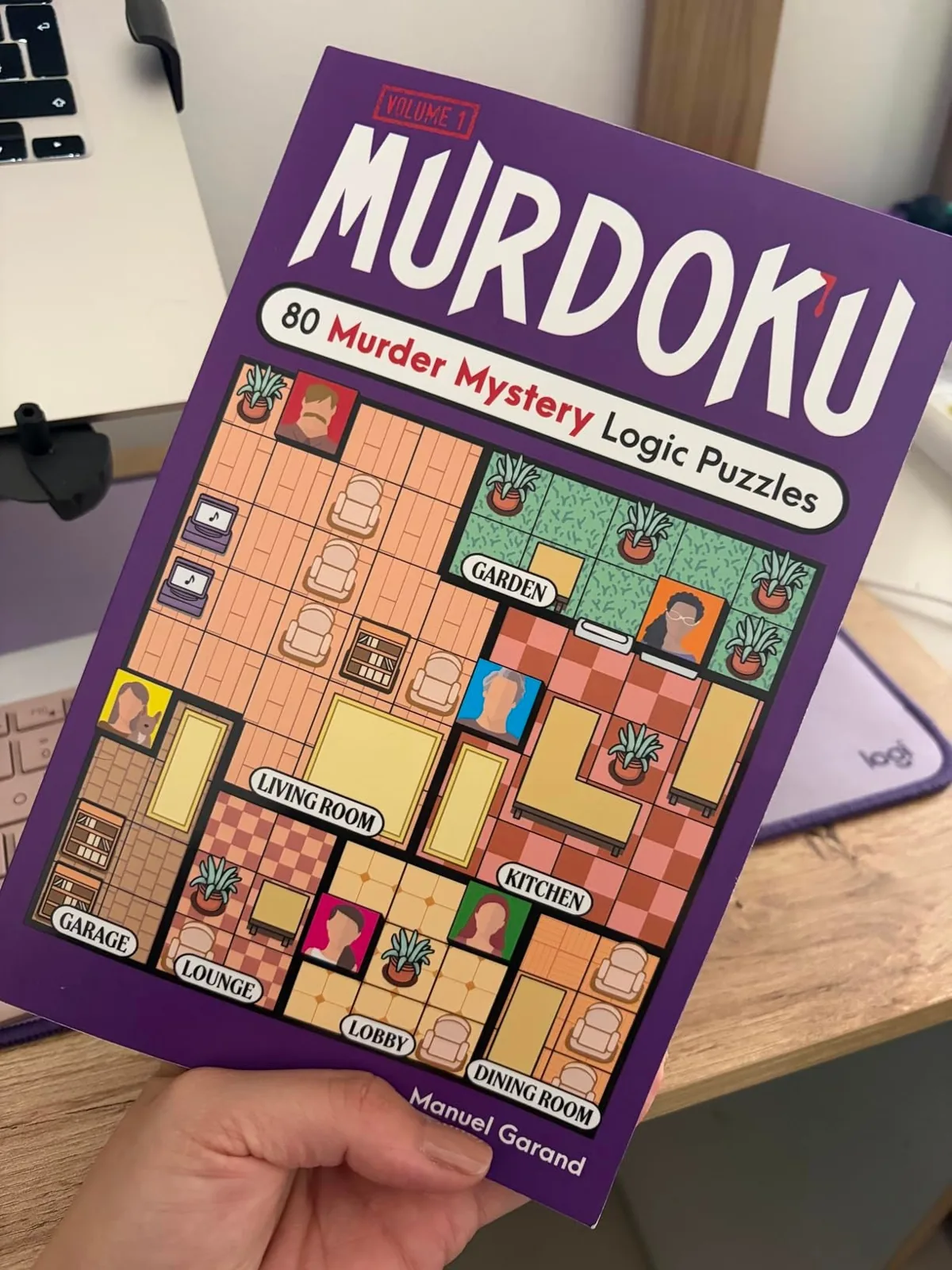
Half Sudoku, half detective story. Murdoku sets each of its eighty crime scenes on an illustrated floor plan, with characters and clues drawn rather than written, and you use those drawn clues, Sudoku-style, to work out who was where and reveal the culprit. Readers find the visual approach friendlier and easier to follow than text-heavy logic puzzles.
The cases start gently and grow tougher as you learn the rules. One solver spent about a month and a half of steady evenings on it, enjoyed the humor along the way, and ordered the second volume before finishing the first.
A good fit if: you liked Murdle but want something more visual.
New York Times Easy to Tough Crosswords
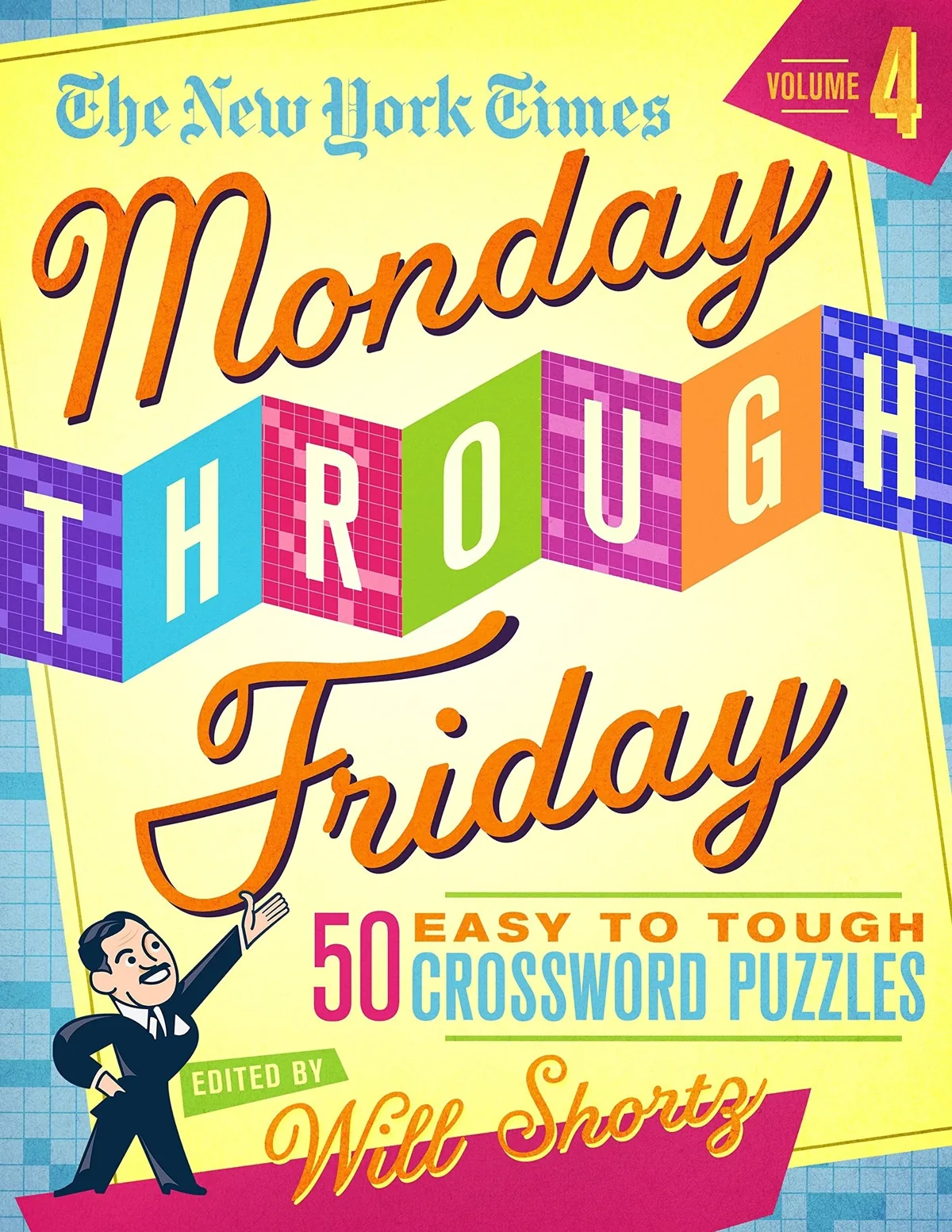
There’s a reason the crossword has survived every new distraction. This spiral-bound collection gathers fifty Times puzzles edited by Will Shortz, running from breezy Monday grids to trickier Friday ones, so you can match the puzzle to your energy level that night.
The spiral binding lies flat on a lap or armrest. One reader worked through several on a flight and found the difficulty just right, neither too easy nor too hard. Keep a pencil tucked in the coil, and don’t be surprised if a mid-puzzle doze sneaks in.
Cain’s Jawbone
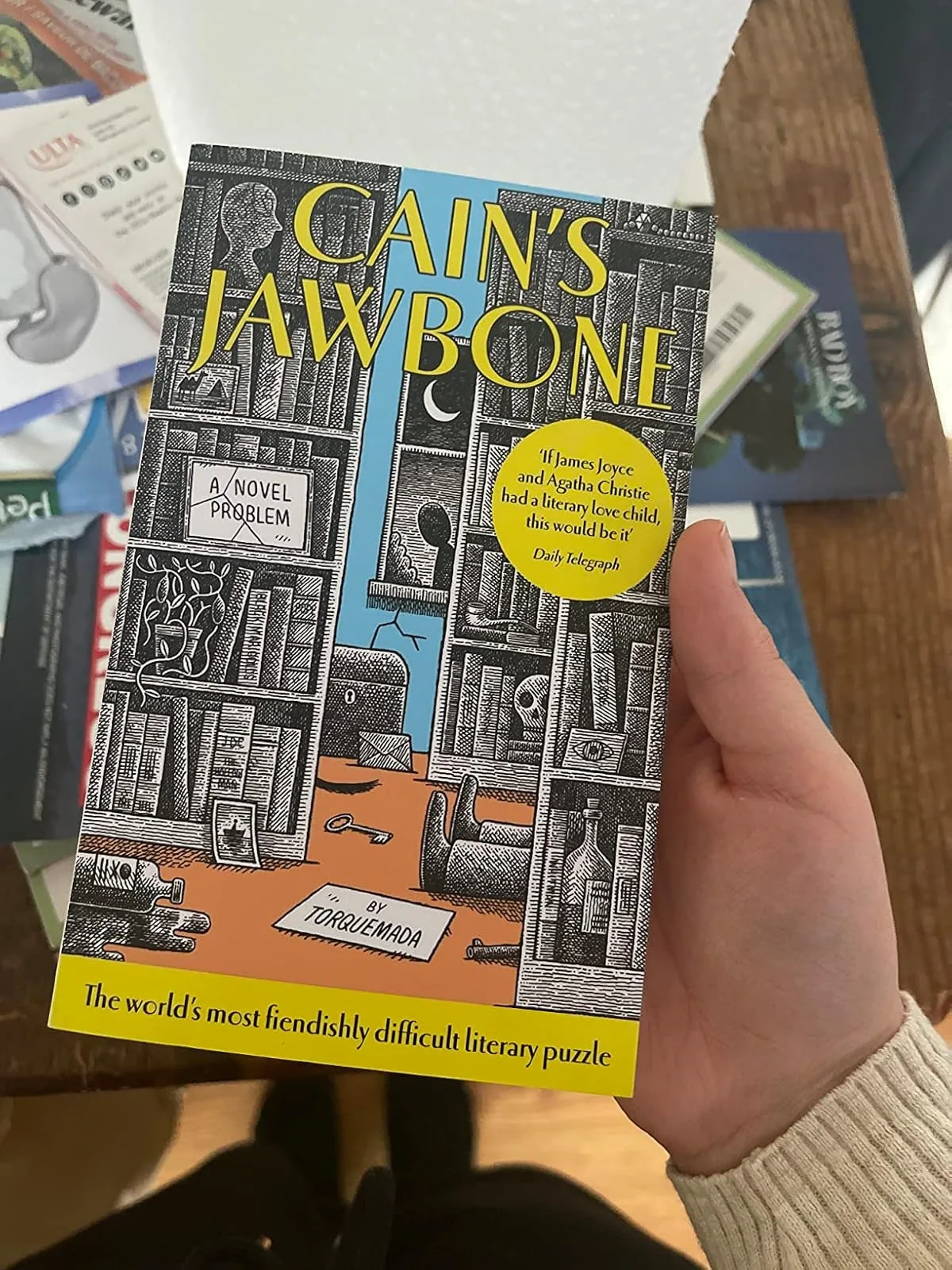
And for the longest evenings of all, a puzzle that may take you a season. Cain’s Jawbone is a murder mystery written by Torquemada in the 1930s, printed as a hundred pages in the wrong order. First you must rearrange them correctly; only then can you begin to solve the murders. When it first appeared, just a handful of readers ever solved it.
Sharp-eyed film fans may recognize it from a bathtub scene in Knives Out. It’s challenging in the best sense, and a natural gift for anyone who loves mysteries.
Pick one, clear a corner of the table, and let it take as long as it takes.
